

Keeping Family Safe in a Blackout: Heat, Food and Medicine
What if the lights going out is only part of the problem? A blackout means mains electricity has stopped; a brownout is a voltage drop that can make lights dim or flicker and appliances behave unusually. Keeping family safe and comfortable during blackouts starts with recognising the difference and prioritising essential needs.
Power interruptions affect more than lighting. Heating and cooling, food safety, medical equipment and refrigerated medicines all need a plan, especially during a prolonged outage. This guide covers practical steps for managing temperature, protecting food and preparing for medical needs. It also explains how solar power hardware can contribute to household backup planning.
Key Takeaways
- Recognise whether you’re dealing with a blackout or a brownout, then prioritise essential household needs.
- Use safer ways to manage indoor temperatures, and plan ahead for heat or cold during an outage.
- Keep fridge and freezer doors shut as much as possible to help protect stored food.
- Plan how powered medical devices and refrigerated medicines will be managed if electricity is interrupted.
1. Safe heating and cooling during outages
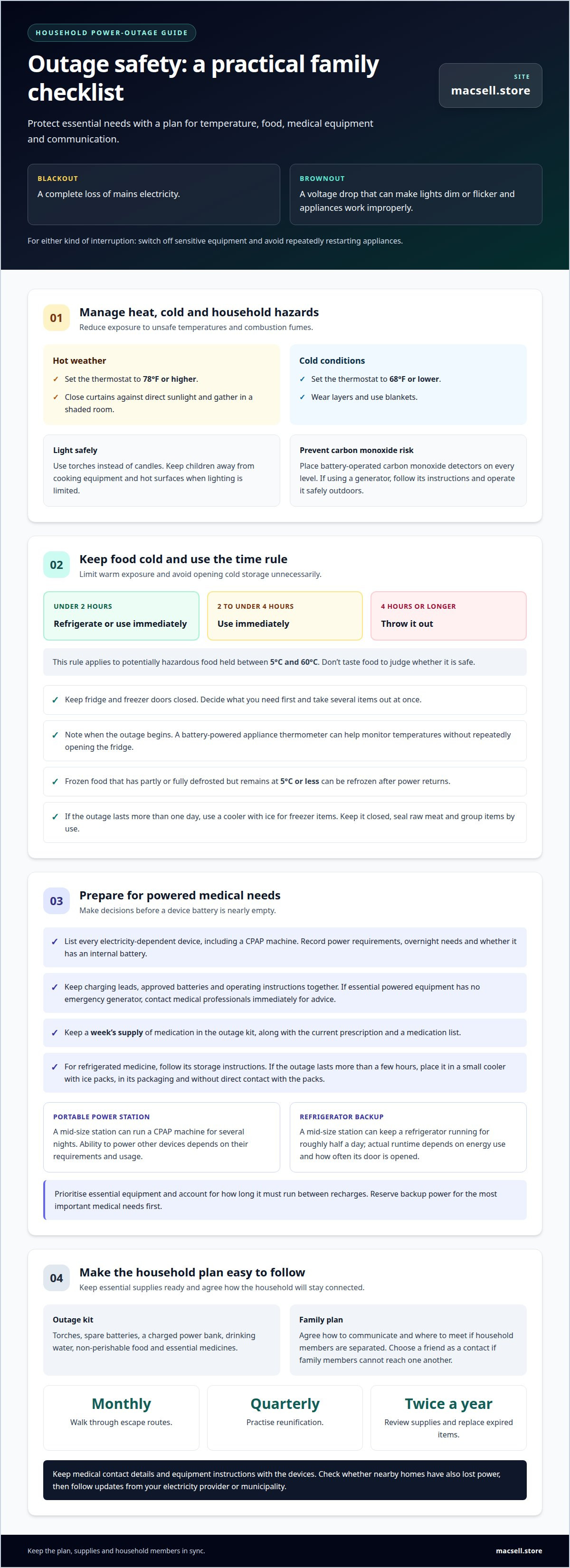
Keeping family safe and comfortable during blackouts starts with reducing exposure to unsafe temperatures and combustion fumes. Place battery-operated carbon monoxide detectors on every level of your home. If you use a generator, follow its operating instructions. In summer, set the thermostat to 78 degrees Fahrenheit or higher; in winter, set it to 68 degrees Fahrenheit or lower. Use torches instead of candles.
For hot weather, close curtains against direct sunlight and gather in a shaded room. In cold conditions, wear layers and use blankets. Keeping family safe and comfortable during blackouts also means keeping children away from cooking equipment and hot surfaces when lighting is limited.
Keep fridge and freezer doors closed, and note when the power fails. The Food Safety Information Council’s four-hour/two-hour rule applies to potentially hazardous food held between 5°C and 60°C: under 2 hours, refrigerate or use it immediately; from 2 to under 4 hours, use it immediately; after 4 hours, throw it out. Frozen food that has partly or fully defrosted but remains at 5°C or less can be refrozen after power returns.
Practise your family outage plan, including how to communicate and where to meet if household members are separated. Walk through escape routes monthly and practise reunification quarterly. Check whether nearby homes have also lost power, then follow updates from your electricity provider or municipality for outage information.
Prepare a kit with torches, spare batteries, a charged power bank, drinking water, non-perishable food and essential medicines. Review supplies twice a year and replace expired items. In South Africa, charge phones from a power bank and use battery-saving mode; follow electricity-provider or municipal updates for outage information. Agree on a friend as a contact if family members cannot reach one another.
2. Keeping refrigerator and freezer doors closed
Keep refrigerator and freezer doors closed during an outage. Each opening lets cold air escape, so decide what you need first and take several items out at once. A battery-powered appliance thermometer lets you monitor temperatures without repeatedly opening the fridge. Note when the outage begins to track how long food has been without power.
According to the Food Safety Information Council, potentially hazardous food held between 5°C and 60°C follows the four-hour/two-hour rule. If it has been in that range for less than 2 hours, refrigerate it or use it immediately. After 2 hours but before 4 hours, use it immediately. At 4 hours or longer, throw it out. Don’t taste food to judge whether it is safe.
Frozen food that has partly or fully defrosted but remains at 5°C or less can be refrozen after power returns. If an outage lasts more than one day, prepare a cooler with ice for freezer items. Seal raw meat to prevent its juices touching ready-to-eat food. Keep the cooler closed and group items by use, so you can retrieve what you need quickly.
If an outage lasts more than a few hours, place refrigerated medicine in a small cooler with ice packs. Keep the medicine in its packaging and prevent direct contact with the packs. Follow its storage instructions and monitor the cooler’s temperature rather than assuming it stays cold as the ice melts. A generator can power a fridge, but operate it safely outdoors and follow its instructions.
For backup-power planning, explore lithium batteries as one component of a suitable system. The power needed depends on the appliances and circuits you want to support. Matching the system to those loads helps clarify whether refrigeration belongs among your priority needs.
3. Medical devices and refrigerated medication
List every device that depends on electricity, including a CPAP machine, and record its power requirements. Note which equipment is essential overnight and which has an internal battery. Store charging leads, approved batteries and operating instructions together so they are easy to reach during an outage.
Make a backup plan before the power fails. If someone relies on powered medical equipment and no emergency generator is available, contact medical professionals immediately for advice about the person’s equipment and care needs. Don’t wait until a device’s battery is nearly empty to decide what to do.
A mid-size portable power station can run a CPAP machine for several nights, but its ability to power other devices depends on their requirements and usage. Compare each device’s power demand with the station’s output and stored energy. Prioritise essential equipment and account for how long it must run between recharges.
Keep a week’s supply of medication in the household outage kit, along with the current prescription and a medication list. For insulin and other medicines that require refrigeration, follow the storage instructions supplied with the medicine. If the outage lasts more than a few hours, place cold medication in a small cooler with ice packs, as described above. Avoid direct contact with ice, which could expose medicine to freezing temperatures.
Separate medication from food in the cooler, and keep its packaging and labels dry. Note when the cooler was packed and monitor its temperature where possible. A mid-size portable power station can keep a refrigerator running for roughly half a day, but actual runtime depends on the refrigerator’s energy use and how often its door is opened. Reserve backup power for the most important medical needs first.
Before an outage, write down the treating medical professional’s contact details and the steps to take if equipment stops working. Keep the plan with the devices and make sure household members know where to find it. A clear device list, medication record and power plan make decisions easier during an interruption.
4. Blackout and brownout basics
A blackout is a complete loss of mains electricity. A brownout is a voltage drop that may make lights dim or flicker and appliances work improperly. The distinction matters: a dark home indicates a full interruption, while flickering lights can point to an unstable supply. In either case, switch off sensitive equipment and avoid repeatedly restarting appliances.
During a blackout, use torches rather than candles. Keep children away from cooking equipment, hot surfaces and dark stairways. Leave one light switched on so you can see when power returns. Unplug or switch off non-essential appliances, and disconnect equipment that could be affected by a surge when electricity is restored.
During a brownout, don’t assume dim lights mean the supply is safe for every device. Stop using equipment that behaves unusually, such as a struggling motor or a light that keeps flickering. Wait for the supply to stabilise before switching appliances back on. Keep people and pets away from fallen power lines and report them to your electricity provider immediately.
Make the emergency plan practical for everyone in the household. Mark more than one exit route from the home and neighbourhood, with a nearby meeting point and another outside the neighbourhood. Practise the routes monthly and rehearse family reunification quarterly. Update the plan as children grow and household needs change, and agree how to communicate if mobile service is disrupted.
Keep torches, spare batteries, drinking water, essential medicines and a charged phone power bank together. Review the kit twice a year and replace expired supplies. During an outage, check whether neighbours are also affected, then follow updates from your electricity provider or municipality. This can help distinguish a wider interruption from a fault inside your home.
For planned household backup-power equipment, explore backup-power options suited to the devices and essential circuits you need to support.
MacSell Solar Outlet
MacSell Solar Outlet sells solar power hardware for households planning how to maintain essential electricity during outages. Hybrid inverters, lithium batteries and solar panels can form part of a home backup setup. Choose equipment according to the circuits and devices you need to support.
For a packaged option, the Sunsynk 8KVA & 2X Hubble AM2 5.5 KWh Combo Kit brings together an inverter and lithium batteries. Individual components may suit other system requirements. Consider which essential loads matter most, such as refrigeration, lighting or medical equipment, and how long they need power when planning the system.
If you’re assessing hardware for household backup power, contact MacSell Solar Outlet to discuss the available solar equipment.
Make your household backup plan practical
Turn your household’s priorities into a backup-power plan. Decide which essential circuits and devices matter most, then consider how their power needs fit together. Keeping family safe and comfortable during blackouts means matching equipment to those priorities, rather than choosing hardware without a clear purpose. Include household members in the decision, especially anyone who relies on powered medical equipment or refrigerated medicine.
MacSell Solar Outlet offers hardware for household backup-power planning, including hybrid inverters and lithium batteries. If you’re ready to discuss equipment for your needs, contact MacSell Solar Outlet about backup-power options. A considered plan gives your family a clearer starting point for the next power interruption.
Frequently Asked Questions
What is a blackout?
A blackout is a complete interruption to the mains electricity supply. A brownout is a voltage drop that may cause lights to dim or flicker and appliances to behave unusually. If your neighbours still have power but your home is dark, for example, the fault may be limited to your property. Note what has stopped working and avoid using equipment that behaves abnormally.
How can families prepare for a blackout in South Africa?
Build a household plan around communication, essential needs and safe movement through the home. Keep important phone numbers, medical details and instructions for essential devices together in a printed folder in case phones run out of charge. Agree on a family contact who lives elsewhere and practise how to reach them. Review the plan when household needs or contact details change.
What emergency supplies should a family keep at home during load shedding or a power outage?
Alongside torches, batteries and a phone power bank, consider a first-aid kit, a manual tin opener, basic hygiene items and pet supplies. Keep essential medication and a written medicine list in an accessible place. A battery-powered radio can provide another way to receive updates if mobile devices lose charge or connectivity. Store supplies together so family members can find them quickly.
How can you keep babies, children, older people and pets comfortable during a blackout?
Prioritise anyone who may struggle to regulate temperature or move safely in low light. Supervise children around cooking areas and steps, and keep familiar comfort items within easy reach. Give older people a clear, well-lit route to essential rooms. Keep pets indoors with fresh water, and secure them before opening doors when using torches.
What are safe ways to keep warm or cool without electricity during a blackout?
For warmth, wear layers, use blankets and gather household members in one room. To reduce heat, close curtains against direct sun and use a shaded, ventilated room. Drink water and limit strenuous activity in hot conditions. Avoid improvised heating methods. Use equipment only as its manufacturer directs, and keep children and pets away from hot surfaces.
How can families use candles, gas stoves, generators and portable heaters safely indoors?
Choose torches instead of candles to reduce fire risk. Never operate a generator indoors. Place it outdoors, away from doors and windows, and follow its instructions. Use gas stoves for cooking, not as room heaters, and operate portable heaters only as directed by the manufacturer. Install battery-operated carbon monoxide detectors on every level of your home, and keep heating equipment away from children and pets.