

Solar Kit Without Installation in South Africa: 2026 Guide
If you’re searching for “solar kit without installation South Africa”, treat the result as a hardware purchase, not necessarily a ready-to-use system. What’s included can vary, so check the component list before you buy.
Before choosing a kit, check whether its panels, inverter and battery work together and whether the equipment suits your property and power needs. MacSell Solar Outlet sells solar hardware and pre-configured kits, with installation arranged separately. Keep those steps distinct when comparing kit contents, checking manufacturer specifications and planning who will complete the electrical work.
This 2026 guide explains what a hardware kit may include, how to check compatibility and suitability, and what to confirm against the product listing before purchase. It also covers what to organise independently, including installation and any applicable registration requirements. Use the checklist to assess the equipment as a system and plan the work around it.
Key Takeaways
- A solar kit without installation South Africa is an equipment purchase. Check the product listing to confirm exactly which components are included.
- Match the inverter and battery specifications to your intended loads, and verify compatibility using manufacturer documentation.
- A pre-configured kit can simplify component selection, but still needs to be assessed for your property and requirements.
- Prepare a list of household loads and backup priorities, then confirm the final equipment list before ordering.
- MacSell sells solar panels, hybrid inverters, lithium batteries and Deye products, including a listed Sunsynk and Hubble combo kit to investigate.
What does a solar kit without installation in South Africa mean?
A solar kit without installation in South Africa is equipment sold separately from the work of fitting and connecting it at your property. The retailer supplies the hardware listed for sale, but the purchase does not automatically include installation. Check the product listing and arrange any assessment and installation separately.
Keep four responsibilities distinct: hardware supply is the equipment you buy; system design determines what configuration may suit your needs and property; installation is fitting and connecting the equipment; and ongoing support is assistance after purchase or installation. These may involve different providers. Confirm what each party is responsible for instead of assuming one purchase covers all four.
What may be included in a solar hardware kit?
A typical system may use solar panels to generate electricity, an inverter to convert and manage that electricity, and a battery to store energy for later use. These are the photovoltaic system components, but a particular kit may not include all of them. Cabling, mounting hardware and electrical protection equipment may also be listed separately or excluded.
Read the specific product listing before ordering. Check each included component, its quantity and any stated specifications. If an item is not explicitly listed, ask whether it is part of the package or needs to be sourced separately. Don’t infer what a kit contains from its name or a photograph alone.
Who arranges installation when it is not included?
The buyer arranges a property assessment and installation separately. Before purchasing, discuss the intended system with a qualified professional who can assess the property and confirm installation requirements. A product listing describes the hardware, but cannot establish remotely whether a particular configuration suits your home.
MacSell sells solar hardware, including hybrid inverters, lithium batteries and solar panels, but does not provide installation services. Treat equipment selection and installation planning as separate steps: confirm the kit’s current specifications and listed contents, then organise a professional assessment and installation independently. Check directly with the relevant provider whether any ongoing support is included, as this is separate from both the hardware purchase and installation.
How to check solar kit components and compatibility before buying
Start by listing what you want the system to run. Note the appliances, their electrical requirements and which loads need backup during an outage. This gives you a practical basis for discussing system size and configuration with a qualified professional. There is no single inverter or battery specification that suits every household.
Assess the components as a system, not as unrelated products. The inverter manages power conversion, the battery stores energy for use when needed, and panels generate electricity. Before buying a solar kit without installation South Africa option, check it against your intended loads and the equipment manufacturers’ documentation.
Match the inverter and battery using verified specifications
Compare the inverter and battery documentation for stated voltage, communication protocols and operating compatibility. Check the exact model references and any conditions set by the manufacturers. A shared brand, product category or kit label alone does not confirm that the components will work together in your planned setup.
MacSell lists the Sunsynk 8KVA and 2X Hubble AM2 5.5 KWh Combo Kit as an option to investigate. Check its current specifications and package contents against the product listing and manufacturer documentation. For a closer look at the equipment, consult the Sunsynk and Hubble combo kit hardware guide, then ask a qualified professional to assess whether it suits your requirements.
Check whether panels and balance-of-system items are included
Don’t assume panels are part of a kit. Check the listing for panel quantity and specifications, then have these assessed against the selected inverter’s requirements. Confirm whether cabling, mounting components and electrical protection are included or need to be sourced separately. These details affect what you’ll need to organise for a complete installation.
Use this solar power hardware checklist for South Africa as a broader prompt for reviewing equipment and package contents. Ask the retailer to clarify any item that isn’t explicitly listed before placing an order.
Also establish whether the planned system will connect to the grid. Registration requirements can depend on that distinction: SAnews explains that systems without a grid connection are exempt from registration. Check the official registration requirements and confirm the process with your electricity distributor where relevant.
Once you have your requirements and compatibility questions ready, review MacSell’s solar hardware range and compare the listed equipment with your professional’s assessment.
Compare a pre-configured solar kit with selecting components separately
A pre-configured kit groups specified equipment for purchase, while selecting components separately lets you choose each item for the project. Neither route guarantees the system will suit your property. When comparing a solar kit without installation South Africa purchase with separate components, assess the listed contents and specifications against your requirements.
| What to compare | Pre-configured kit | Separate component selection |
|---|---|---|
| Included components | Review the listing to confirm exactly what’s supplied. | Build and verify your own equipment list. |
| Flexibility | The combination is already specified, so component choice may be more limited. | You can choose components individually to meet project requirements. |
| Compatibility checks | Verify that the listed equipment suits your planned system; configuration alone isn’t proof. | Check compatibility across every selected component against manufacturer documentation. |
| Information to confirm | Current specifications, package contents and any items not included. | Specifications, quantities and what additional equipment is needed. |
When a pre-configured kit may simplify procurement
A listed combination gives you a defined group of equipment to review, which can make the main hardware selection more straightforward. MacSell lists the Sunsynk 8KVA and 2X Hubble AM2 5.5 KWh Combo Kit as one example. Before purchase, check the current listing for exact contents and specifications, then verify technical compatibility for your planned system. A pre-configured kit can simplify selection, but does not confirm suitability for every property.
When selecting components separately may suit the project
Selecting components separately may suit a project with particular requirements or a need to compare different equipment options. The trade-off is that you take on more responsibility for checking that the inverter, battery and any panels work together as intended. Confirm each model’s requirements against manufacturer documentation. The home inverter and battery combo hardware guide offers related considerations for reviewing equipment combinations.
Keep system selection distinct from installation planning. If you’re arranging installation separately, discuss the proposed equipment with a qualified professional. The South African Photovoltaic Industry Association is an industry resource to consult as you plan that step.
Choose the route that fits your needs and the technical checks you can complete. A solar kit without installation South Africa buyers compare still needs to be checked against the property and project requirements. Review MacSell’s solar hardware selection, then confirm the current listing details before ordering.
How to prepare for a solar kit purchase without installation
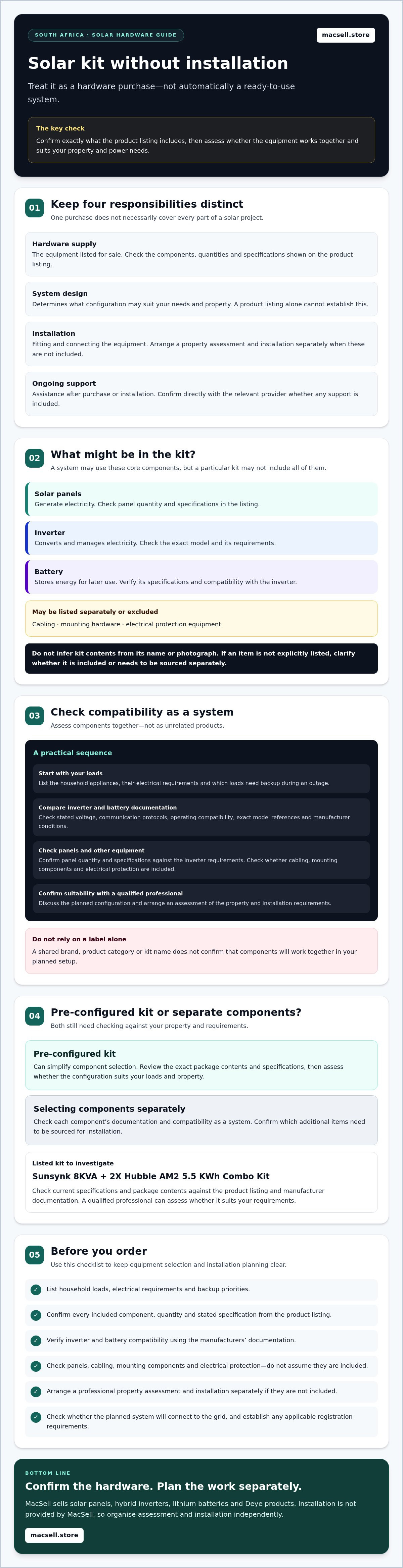
Buying equipment and assessing the property are separate checks. Use this sequence to prepare for a solar kit without installation South Africa purchase, then confirm the proposed setup with a qualified professional before finalising installation arrangements.
- Document the loads. List the appliances and equipment you want the system to support. Note which items need backup during an outage and, if available, their power ratings.
- Record existing equipment. Write down the make and model of any inverter, battery or panels already installed. Keep specification sheets or manuals available to share with the professional assessing the project.
- Review the kit listing. Record each item and quantity shown. Check what’s excluded, what may need to be sourced separately, and the current specifications in the product documentation. Don’t rely on a kit name alone to establish its contents.
- Arrange a property-specific assessment. Ask a qualified professional to assess the site and discuss electrical requirements and applicable local standards. Equipment selection and site assessment are separate checks; product information alone cannot confirm whether a system suits your property.
- Confirm the final equipment list. Compare the proposed equipment with the professional’s assessment and manufacturer documentation. Resolve questions about compatibility or missing items before ordering.
- Check order and delivery details. Confirm package contents, delivery arrangements and which product documents the retailer will supply. Keep the final equipment list available for the person coordinating installation.
What to confirm with the installation professional
Share your load list, existing equipment details and the specifications for the proposed kit. Ask the professional to assess site conditions, electrical requirements and applicable local standards, then confirm whether the proposed equipment is suitable before finalising installation arrangements. A remote product discussion or retailer listing is not a property assessment.
MacSell sells solar hardware, but does not carry out property assessments or installations and does not provide emergency technical support. Keep those responsibilities clear as you plan the purchase. For equipment options, review MacSell’s solar hardware and check the current product listing before ordering.
Choose solar hardware from MacSell and plan installation separately
MacSell Solar Outlet sells solar hardware to customers across South Africa, including hybrid inverters, lithium batteries, solar panels and Deye products. Its listed options also include the Sunsynk 8KVA and 2X Hubble AM2 5.5 KWh Combo Kit. Assess these equipment options against your project requirements, rather than treating them as a substitute for a property-specific assessment.
MacSell sells hardware only. It doesn’t provide installation, financing or 24/7 emergency technical support. Plan the equipment purchase and installation as separate parts of the project, and confirm who is responsible for each before ordering.
How to review a product listing before selecting equipment
Check the product listing carefully before deciding. Confirm the exact product name, stated specifications, included items and exclusions. Don’t assume panels, cabling, mounting components or protection equipment are included unless the listing says so. Check the current listing for product details and stock status, and ask the retailer to clarify anything that remains uncertain.
Then compare the listed hardware with the requirements confirmed by a qualified professional. Manufacturer documentation can help you check whether the proposed components are compatible, but it does not assess your property or determine whether the system is suitable for your site.
Next steps after choosing a hardware option
Before finalising the purchase, arrange any required site assessment and installation separately with a suitable professional. Share the product specifications and documentation so they can review the equipment against site conditions and installation requirements. Keep the final equipment list and product documents accessible while planning.
If you’re budgeting for equipment, MacSell’s South African solar system hardware cost breakdown provides separate context. Check the relevant product listing for current details rather than relying on general figures or assumptions about what a kit includes.
For a solar kit without installation in South Africa, select equipment based on verified requirements, confirm the exact package contents, then organise assessment and installation independently. Explore solar hardware and kits to review the available product options.
Make your next solar purchase an informed one
A solar kit without installation South Africa buyers consider is a hardware purchase, so check the product listing for exact contents and verify component compatibility against manufacturer documentation. Pre-configured equipment can simplify selection, but it still needs to suit your property and power requirements.
Keep equipment selection separate from installation planning. Document your household loads, confirm the final equipment list and arrange a property-specific assessment with a qualified professional before installation. These steps help you move from browsing hardware to planning a suitable system.
MacSell sells hybrid inverters, lithium batteries and solar panels to customers nationally across South Africa. Its listed range includes the Sunsynk 8KVA and 2X Hubble AM2 5.5 KWh Combo Kit. Check current specifications and included components on the relevant listing, then explore solar hardware and kits.
With the equipment details checked and installation organised separately, you can take the next step with a clearer plan.
Frequently Asked Questions
What does a solar kit without installation include?
Contents depend on the specific kit, so check its product listing rather than assuming it is a complete system. A package may include an inverter, battery or panels, but cabling, mounting components and electrical protection may be excluded or listed separately. Confirm the exact items, quantities and specifications before ordering. The kit name or product photograph alone doesn’t establish what’s supplied.
Can I buy a solar kit and arrange installation separately?
Yes. You can buy the hardware and arrange a property assessment and installation separately. Before ordering, share the proposed equipment specifications with a qualified professional and confirm that the system suits your requirements and site. Also establish who will handle installation and what it includes. MacSell Solar Outlet sells solar hardware and kits, but doesn’t provide installation services.
How do I know if a solar inverter and battery are compatible?
Check the manufacturers’ documentation for the exact inverter and battery models. Compare stated voltage, communication requirements and operating compatibility, and confirm that the proposed combination is supported. Don’t rely on brand names or a kit label alone. If any specification is unclear, ask the retailer for the relevant product information and have a qualified professional review the equipment against your planned system before purchase.
Do solar kits without installation include solar panels?
Not always. Kit contents vary, and a listing may cover an inverter and battery without including panels. Check the product description for panel quantities and specifications, and confirm whether cabling, mounting components and electrical protection are included or need to be sourced separately. If the listing doesn’t clearly state what’s supplied, ask the retailer to confirm the package contents before ordering.
What size solar kit do I need for my home?
The right size depends on the appliances you want to run, their power requirements, your backup priorities and any existing equipment. Make a list of the loads you need supported, then share it with a qualified professional for a property-specific assessment. Avoid choosing a kit based only on general household size or product name. The assessment can help confirm a configuration suited to your needs.
How much does a solar kit without installation cost in South Africa?
There isn’t one fixed price for a solar kit without installation in South Africa. The amount depends on the specific equipment and what the package includes. Check the current product listing for its price and confirm whether items such as panels or other installation components are excluded. Compare like-for-like specifications and package contents, and budget separately for assessment and installation arranged through other providers.
Do I need a professional to install a solar kit I buy separately?
Arrange for a qualified professional to assess the property and confirm installation requirements before the equipment is fitted. Solar work involves electrical connections and site-specific considerations, so a product listing cannot confirm suitability or installation safety. Discuss the proposed hardware with the person completing the work and keep its manufacturer documentation available. MacSell sells hardware only and doesn’t provide installation or emergency technical support.