

Sunsynk hybrid inverter vs Victron MultiPlus-II: setup complexity compared
The inverter with fewer boxes isn’t always the simpler system to commission. The question behind “Sunsynk parity inverter vs Victron MultiPlus-II setup complexity” is not just which unit is easier to connect, but how much planning, configuration and system integration the project requires.
An all-in-one hybrid inverter can seem more straightforward: Sunsynk brings key functions together, while a Victron system may combine separate components such as an inverter/charger, solar charge controller and monitoring device. That modularity adds decisions, but it also allows the system to be tailored to specific requirements. The effort depends on the complete design, not the inverter name alone.
This comparison explains the practical setup differences for solar and backup-power projects in South Africa, from checking hardware compatibility to commissioning the system. It shows where each architecture can simplify the process, where additional components or configuration may be involved, and how to match the choice to your requirements.
Key Takeaways
- Assess setup complexity by considering planning, component coordination, configuration and commissioning, not inverter architecture alone.
- Map your loads, backup priorities and solar inputs before deciding whether an integrated hybrid inverter suits your project.
- The Sunsynk parity inverter vs Victron MultiPlus-II setup complexity comparison highlights the trade-off between an integrated design and modular choices.
- Record your existing battery and solar equipment first, so compatibility is part of the decision rather than an afterthought.
- Use your requirements to guide hardware selection, then compare suitable Sunsynk inverters and solar components for your system.
What makes a Sunsynk or Victron MultiPlus-II setup complex?
Setup complexity is the work involved in planning a system, coordinating compatible components, configuring operating settings and commissioning the completed installation. The phrase “Sunsynk parity inverter vs Victron MultiPlus-II setup complexity” describes a comparison between two system approaches, but the inverter label alone can’t predict the work involved. The model, system design and installer’s experience all matter.
Architecture is one factor. A Sunsynk hybrid inverter brings key functions together in one unit, while a Victron MultiPlus-II system may need separate components to meet the project brief. Fewer components don’t automatically mean lower technical risk or better performance. Poor planning, unsuitable equipment or incomplete commissioning can undermine either approach.
Both systems need connections and settings suited to their intended use. Commissioning involves configuring and checking the completed system against its design, and electrical compliance matters too. The Solar inverter overview explains how inverter types and functions, including maximum power point tracking (MPPT), relate to solar systems. Exact features and setup processes depend on the model.
What does a simpler solar inverter setup mean?
Setup complexity is the planning, component coordination, configuration and commissioning effort required to make an inverter system work as designed. A simpler setup generally involves fewer decisions or fewer separate components to coordinate. It doesn’t mean the work is risk-free, that performance will be better, or that commissioning and compliance can be skipped. These requirements apply to either architecture.
Why project requirements change the comparison
A defined residential backup brief can be relatively direct: identify the essential loads, decide how long they need support, then plan the battery and solar arrangement around them. A system intended to expand later adds decisions about how components will work together as requirements change. Modularity can be useful in that case, but it also calls for more coordination during planning.
Start with the property and how the system will be used. A household prioritising selected backup loads, for example, has a different design brief from one planning to add solar or storage in stages. Relevant inputs include:
- Loads: which appliances need backup and how they may operate at the same time.
- Battery arrangement: existing or planned batteries, their compatibility and how the system will use them.
- Solar configuration: the panel layout and the required solar input.
- Future changes: whether the system is expected to grow or remain focused on its initial brief.
These factors shape equipment selection and commissioning effort. A setup that suits one property may not suit another with different loads, roof layout or expansion plans. Compare the complete system design, not just the number of boxes or the inverter architecture.
How Sunsynk’s hybrid inverter architecture shapes setup
A Sunsynk hybrid inverter brings several system functions together in one unit. Depending on the model, these may include converting solar and battery power for household use and managing solar input through built-in MPPTs. The exact functions and limits vary across the range, so “all-in-one” describes the general architecture, not a guarantee that every model has the same inputs, ports or settings.
Integration can reduce the number of separate devices and interfaces to coordinate, but it doesn’t remove design work. The inverter still needs to suit the loads, battery, solar array and backup arrangement. That distinction matters in the Sunsynk parity inverter vs Victron MultiPlus-II setup complexity comparison: fewer separate components may simplify coordination, while model selection and system configuration still require care.
Which decisions still affect Sunsynk setup?
Start with the inverter model, then compare its documented capacity and limits with the intended loads. A household backing up selected circuits has a different brief from one expecting the inverter to support a broader range of appliances. Use current manufacturer documentation for the specific model rather than assuming that output, solar inputs or operating settings are the same across the range.
Battery choice is another key decision. Compatibility involves more than matching nominal voltage: the selected equipment may have specific communication requirements, connection methods and configuration settings. Check these against the inverter and battery documentation. If a battery is already part of the system, record its model and configuration before selecting an inverter.
Solar input and backup priorities complete the design brief. Consider the intended panel arrangement and how the system should treat essential loads during an outage. Then compare the selected model’s input limits, ports and settings with current Sunsynk documentation. Don’t assume that a feature or connection on one Sunsynk inverter is available on another.
Where an integrated inverter can simplify coordination
When more functions are housed in the inverter, there may be fewer separate devices to select and connect than in a system assembled from distinct components. This can reduce interface decisions and make the equipment list more direct. The benefit is clearest when the chosen model aligns with the project brief; a mismatch can still lead to redesign or extra configuration.
Wiring, protection, battery communication, load allocation and commissioning remain specific to the property and system design. A neat equipment list doesn’t prove that a system is correctly configured or compliant. Installation quality and commissioning still shape the result, and setup time will vary between projects.
For a Sunsynk system, compare the required functions with the exact model documentation before selecting compatible hardware. Explore Sunsynk hybrid inverter options as part of that selection process.
How Victron MultiPlus-II modularity changes setup complexity
A Victron MultiPlus-II is part of a system design rather than a complete solar arrangement on its own. Depending on the project, the design may coordinate an inverter/charger with a solar charge controller, battery communications and monitoring equipment. This creates more component choices to resolve, while allowing the system to be tailored to the required functions. Modularity alone doesn’t make a system more reliable or better performing than another architecture.
What modularity means for MultiPlus-II planning
Begin by defining what the system needs to do, then identify the equipment and communications needed to support it. Solar charging may call for a suitable charge controller, for example, while monitoring or control requirements may affect whether a GX device is included. Some MultiPlus-II GX models have built-in networking, but functions differ between versions. Check the relevant Victron documentation for the exact model and system design.
Configuration matters too. Victron’s PowerControl and PowerAssist functions can help manage how the system uses available AC input and supports loads, but their behaviour depends on the selected model, settings and installation. Treat them as design considerations, not automatic outcomes. The more specific the monitoring or control brief, the more important it is to define the required components and settings before assembling the system.
Sunsynk vs MultiPlus-II: where setup tasks differ
The comparison is about the decisions each architecture presents, not installation quality or a guaranteed amount of work. This overview shows the typical planning distinction; exact requirements depend on product generation and project design.
Architecture: Sunsynk generally combines key hybrid functions in one inverter; a Victron design may use a MultiPlus-II alongside separately selected system components.
Component coordination: An integrated unit can mean fewer interfaces to plan. A modular Victron system may require decisions about charge control, communications and monitoring equipment.
Configuration: Both approaches need settings suited to the chosen equipment and intended operation. Modular designs can introduce more component-level choices.
Future changes: A defined system may need fewer expansion decisions at the outset. A modular design can offer more ways to adapt the arrangement, with additional choices about how new components connect and communicate.
Initial setup is only one part of the comparison. Later changes may involve adjusting settings, adding monitoring or expanding the system. The work depends on how the original design allows for those changes. A configuration tailored to a fixed backup brief may be more direct; a design intended to evolve may benefit from modular options, while requiring clearer coordination.
For the Sunsynk parity inverter vs Victron MultiPlus-II setup complexity comparison, count the decisions your project actually needs: components, communications, configuration and future changes. Then check each selected model’s documentation. Neither architecture guarantees simpler commissioning or a particular performance result.
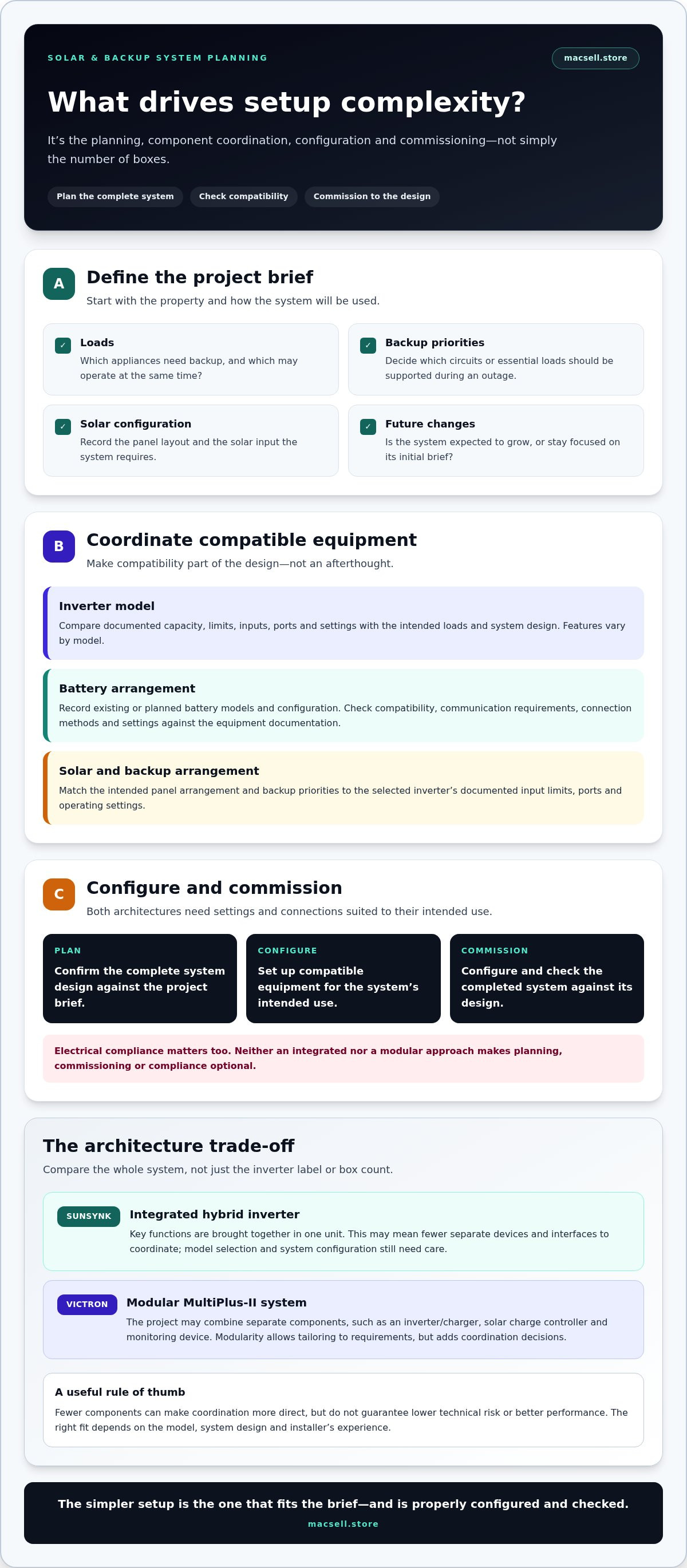
A practical checklist for choosing the easier setup
Compare the systems against a written project brief, not a general claim that one inverter is easier. Work through these steps in order to create a clearer equipment list and a more useful basis for assessing setup and commissioning effort.
Five questions to define your system before choosing
- Which loads need backup? List the appliances and circuits, note when they run and whether they may operate at the same time. This helps define the required inverter capacity and backup priorities.
- What should the backup system support? Separate essential loads from those that can remain off during an outage. State your priorities clearly rather than sizing the system around every appliance by default.
- What battery equipment do you already have? Record the battery make and model, capacity, arrangement and communications details from its documentation. For planned batteries, note the intended equipment and check compatibility information for the inverter you are considering.
- What solar equipment is installed or planned? List existing panels and other solar components, along with the intended configuration. Include planned changes, such as adding panels or storage later, so the design accounts for them.
- What will commissioning involve? Identify the configuration, verification and handover tasks for the selected design. Include the commissioning installer’s familiarity with the chosen architecture, and check current South African electrical compliance requirements against authoritative sources.
How to judge complexity against flexibility
A system with clearly defined loads, backup priorities and solar inputs may suit an integrated architecture if the selected model supports those requirements. Fewer separate component choices can make coordination more direct, but they don’t remove model-specific compatibility checks, configuration or commissioning tasks.
Consider a modular approach if system-specific control or staged changes are priorities. It may offer more ways to shape the design, alongside additional decisions about component selection, communications and future integration. Neither approach is automatically easier for every home.
Compare the complete equipment list and commissioning plan. Include the inverter, batteries, solar components, monitoring requirements and intended future changes. A lower number of components doesn’t establish better installation quality, and a modular system doesn’t guarantee easier expansion. The Sunsynk parity inverter vs Victron MultiPlus-II setup complexity question is best answered by matching the architecture to the written brief, then checking each chosen model against current documentation.
Once your requirements are clear, browse Sunsynk hybrid inverter and solar hardware to compare options for your project.
Choose compatible Sunsynk hardware for your project
Make the decision in sequence: define your requirements first, choose an architecture second, then select the inverter model and compatible components. This keeps the comparison grounded in the system you need, rather than assumptions about which brand is automatically easier to set up.
A Sunsynk hybrid inverter may suit a residential project with clearly defined loads, backup priorities and solar requirements, provided the selected model’s specifications match the design. Check its documented capacity, solar inputs and connection requirements, along with the battery’s compatibility and communications requirements. An integrated approach can reduce separate component choices, but it isn’t automatically the simplest option for every property or system plan.
When a Sunsynk hardware route may fit
Consider Sunsynk where the project brief is established and the relevant inverter model supports the intended configuration. For example, a household planning backup for selected circuits should compare its load requirements with the model’s documented data, then check that the battery and solar equipment suit the system. If the design needs particular controls or staged changes, include those requirements before settling on an architecture.
The Sunsynk parity inverter vs Victron MultiPlus-II setup complexity comparison comes down to the complete design: required functions, component coordination, configuration and commissioning. Model differences matter. Check current Sunsynk documentation and battery compatibility information rather than assuming specifications or settings apply across the range.
Review the system components before purchase
Assemble the information needed to assess the hardware as a system:
- Inverter: intended loads, backup priorities, required capacity and the exact model’s documented inputs and limits.
- Battery: make and model, capacity, arrangement and communication requirements, taken from product documentation.
- Solar equipment: existing or planned panels and their configuration, alongside the inverter’s documented solar input requirements.
- Commissioning: the settings and checks required for the selected components, plus applicable South African compliance requirements verified against authoritative sources.
For an example of hardware combining an inverter and batteries, consider the Sunsynk 8KVA and Hubble AM2 combo kit. Use the equipment combination as a reference point, then assess the specifications against your own loads, solar configuration and battery requirements. A combination relevant to one project is not a substitute for checking compatibility for another.
Keep the hand-off clear: requirements first, architecture second, then model and component selection. MacSell Solar Outlet sells Sunsynk hybrid inverters, lithium batteries and solar panels to help you compare hardware for your project.
Turn your system brief into a hardware choice
Before choosing an inverter, turn your project requirements into a short equipment brief. Record the loads to support, battery details, solar arrangement and any planned changes. Use that brief to compare compatible models and identify the components and commissioning decisions your system will involve.
The Sunsynk parity inverter vs Victron MultiPlus-II setup complexity question has no universal answer. A well-matched system is easier to assess when its hardware, configuration and future requirements are considered together. Check current model documentation as you narrow your options, and keep compatibility at the centre of the decision.
MacSell Solar Outlet supplies Sunsynk hybrid inverters, lithium batteries and solar hardware to customers across South Africa. Browse the range and use your system brief to guide your hardware selection.
Browse Sunsynk and solar hardware at MacSell to compare components for your project.
Frequently Asked Questions
Which is easier to set up: a Sunsynk hybrid inverter or Victron MultiPlus-II?
Neither is universally easier; the better fit depends on the system brief. For a home backing up a defined set of circuits, an integrated Sunsynk model may mean fewer separate devices to coordinate. A design with specific monitoring or control needs may use Victron’s modular options, with more component choices to resolve. For the Sunsynk parity inverter vs Victron MultiPlus-II setup complexity comparison, assess the exact equipment list and commissioning plan.
Is Victron MultiPlus-II more complicated to configure than Sunsynk?
It can involve more configuration decisions if the design includes separate components or specific control functions, but that isn’t true of every system. A straightforward MultiPlus-II arrangement may involve fewer choices than a Sunsynk design with requirements that need careful model matching. Compare the settings and equipment required for your intended use, then refer to current manufacturer manuals for the configuration steps for each model.
Can Sunsynk and Victron components be used in the same solar system?
Possibly, but compatibility must be established for the exact components and system design. A battery may need to communicate correctly with the inverter, for example, and the selected devices must support the proposed arrangement. Check manufacturer compatibility information for the inverter, battery and any control equipment as a complete combination. Don’t assume that matching voltage or using the same connector means devices from different brands will work together as intended.
Does a modular Victron system need more components than a Sunsynk inverter?
Not in every case. A modular Victron design may use separate equipment to provide functions that an integrated hybrid inverter combines, but the final bill of materials depends on the selected models and required features. For a fair comparison, list each system’s inverter, battery, solar-control and monitoring components, plus any required communications equipment. This shows what the project needs, rather than relying on a general brand description.
What makes a solar inverter installation complex?
Complexity can increase if the system must support appliances with high start-up demand, such as some pumps, as well as routine household loads. The design needs to account for how those loads operate and whether they may run together. Battery communications, solar inputs, protection and commissioning also affect the work. Review the complete equipment plan and product requirements, not only the inverter model or its rated output.
Do I need a professional to install a Sunsynk or Victron MultiPlus-II system?
These systems involve electrical connections, configuration and commissioning, so installation should be handled by appropriately qualified professionals. The required work depends on the property, selected equipment and system design. Before work begins, confirm that the design follows the relevant manufacturer instructions and current South African electrical compliance requirements. Keep the product documentation available, including inverter and battery manuals, so equipment settings and compatibility can be assessed accurately.
Which system is better for future solar or battery expansion?
Neither is automatically better for expansion. If you plan to add panels or battery capacity later, identify that change before choosing equipment and compare it with the exact model’s limits and compatibility requirements. A future battery addition may depend on supported battery types and communications, while extra solar may depend on available input capacity. Use current product documentation to establish whether the proposed expansion fits the system design.