

When to Replace a Hybrid Inverter and Check Compatibility
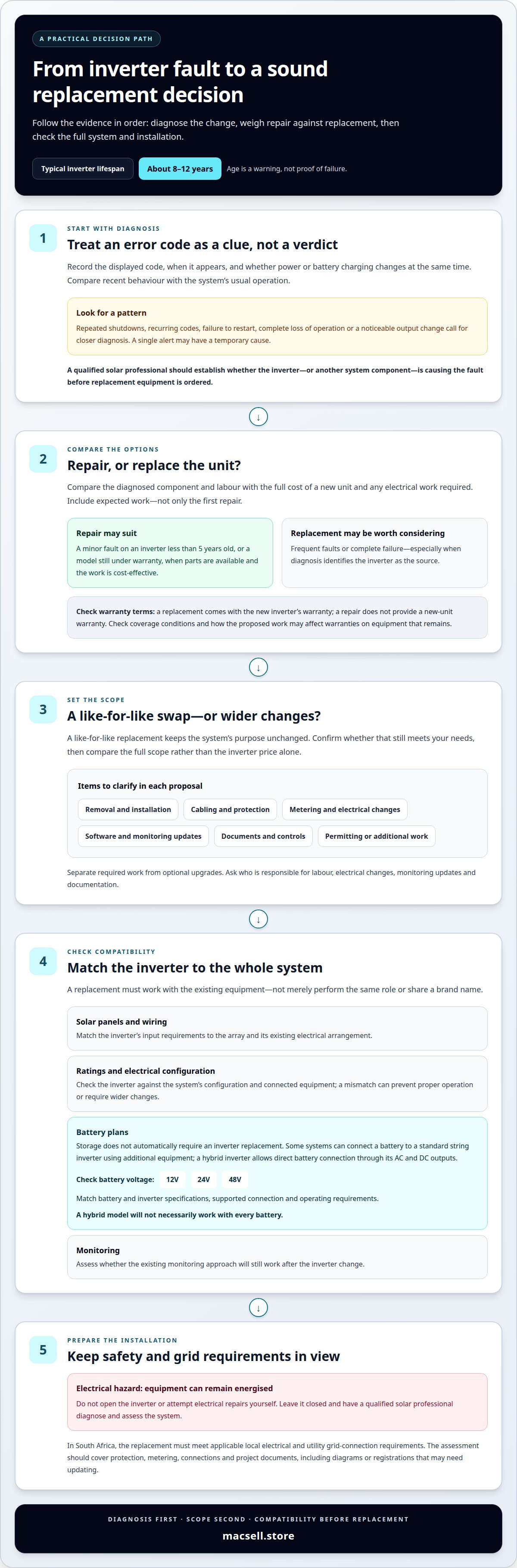
An inverter’s age is a warning, not a verdict. A typical solar inverter lasts about 8 to 12 years, but when to consider replacing a hybrid inverter depends on its condition, recurring faults and whether it still suits the rest of the system. An error code alone doesn’t mean the unit needs replacing; diagnosis comes first.
It’s reasonable to want a clear answer before changing a key part of your solar setup. A like-for-like replacement may be enough if the system still meets your needs. A hybrid inverter may suit plans to add battery storage or make other changes to the system.
This guide explains the signs that point to replacement, when repair or a straightforward swap may make sense, and which compatibility details matter in South Africa. It also explains how to treat inverter errors as diagnostic clues, not a final diagnosis.
Key Takeaways
- Look for recurring faults and changes in system performance, then identify the underlying cause before deciding on replacement.
- A focused swap may suit a system that still meets your needs; weigh repair, replacement scope and warranty implications before choosing.
- Assess a replacement inverter against your solar modules, wiring, electrical configuration, battery and monitoring requirements.
- Use performance trends and error codes to guide diagnosis, rather than treating a single alert as proof of inverter failure.
What should you consider when replacing your inverter?
Base the decision on diagnosis, not an error code alone. In South Africa, consider the installation, grid connection and any battery plans. Knowing when to consider replacing a hybrid inverter starts with identifying what has changed and whether the inverter is the cause.
Diagnosing inverter faults
Diagnosis identifies whether the inverter or another system component caused the fault. Record the displayed error, when it appears, and whether power or battery charging changes at the same time. An error code can point to a problem, but it doesn’t prove the inverter needs replacement. A qualified solar professional should assess the system before replacement equipment is ordered. This helps distinguish recurring inverter faults from issues elsewhere in the installation. A typical inverter lifespan is about 8 to 12 years, but age alone doesn’t establish failure.
Signs of inverter failure
Common warning signs include repeated shutdowns, recurring error codes, complete loss of inverter operation or a noticeable change in system output. A single alert may have a temporary cause, but repeated faults or failure to restart call for closer diagnosis. If the battery stops charging, note when the change began and any inverter code that appears. Compare recent system behaviour with its usual operation instead of relying on one reading. Frequent faults or complete failure are reasons to consider replacement, especially if diagnosis identifies the inverter as the source.
Safety risks during replacement
Solar equipment can remain energised, creating an electrical hazard during diagnosis or replacement. Don’t open the inverter or attempt electrical repairs yourself. A qualified solar professional should diagnose the system and assess replacement. In South Africa, the replacement must meet applicable local electrical and utility grid-connection requirements. The assessment should cover protection, metering, connections and project documents, including diagrams or registrations that may need updating. These checks help prepare the installation for the replacement and grid connection. If you’re unsure, leave the equipment closed and arrange professional diagnosis. This can help establish whether to consider replacing a hybrid inverter or continue investigating the fault.
When is a simple replacement enough?
A like-for-like swap keeps the system’s purpose unchanged. First compare repair, warranty cover and the full scope of replacement.
Repair versus replacement costs
Compare the repair quote with the full cost of a new unit. This matters because a minor fault on an inverter less than 5 years old can suit repair. Repair also suits a model still under warranty, when parts are available and the work is cost-effective. Compare the diagnosed component and labour with replacement equipment and required electrical work. A low repair figure alone doesn’t show the full value of either option.
For example, a failed component on a relatively new inverter is a different case from recurring faults that need several repairs. Include the expected work, not just the first repair. This comparison helps show whether keeping the existing unit remains practical.
Warranties and service responsibilities
A replacement comes with the new inverter’s warranty, while a repair doesn’t provide a new unit warranty. Read the applicable warranty terms before choosing, including coverage conditions and responsibilities. Consider how changing the inverter could affect warranties on components that remain in place. The inverter, battery and other connected equipment may each have separate terms, so identify which parts the proposed work affects.
Clarify who is responsible for replacement labour, electrical changes, monitoring updates and documentation. A written breakdown separates equipment from work and makes exclusions easier to spot. It also helps you compare proposals consistently instead of treating different scopes as equivalent.
Assessing full project scope and costs
Replacement costs depend on more than the inverter itself. Compare removal, installation, cabling, protection, metering, software, documents and controls. Electrical changes, permitting, roof access, monitoring updates and additional work can also affect the total. Separate required work from optional upgrades, then compare each item across proposals. This shows whether a simple swap is sufficient or the installation needs wider changes.
Once the scope is clear, use it to guide your replacement equipment choices and avoid paying for changes unrelated to the diagnosed need.
Compatibility with existing solar equipment
A replacement solar inverter must work with the existing system, not just perform the same role. Assess the solar panels, wiring, electrical configuration, equipment ratings, battery and monitoring approach together.
Start with the panels and their electrical arrangement. The inverter’s input requirements must match the array and existing wiring. Then compare its ratings with the system’s electrical configuration and connected equipment. A mismatch can prevent proper operation or require wider changes. Compatibility depends on the whole system, not just a brand-name match.
Battery plans affect the choice. Wanting storage doesn’t automatically mean you must replace the existing inverter. Some systems can connect a battery to a standard string inverter using additional equipment, while a hybrid inverter allows direct battery connection through its AC and DC outputs. That difference informs the design, but a hybrid model won’t necessarily work with every battery.
- Match the battery voltage to the inverter input. Common examples include 12V, 24V and 48V.
- Check the battery and inverter specifications as a pair, including their supported connection and operating requirements.
- Assess whether the monitoring approach will still work after the inverter change.
A hybrid inverter doesn’t automatically provide backup power. Backup depends on the system design and equipment capabilities. Confirm how the installation is intended to operate during a grid interruption instead of assuming the hybrid label guarantees supply.
For example, if the panels, roof, wiring and monitoring remain in good condition and you don’t need extra capabilities, a focused inverter replacement may suit the system. If you’re also changing panels or storage, assess the combined design before choosing equipment. Include applicable local and utility requirements, wiring and equipment ratings in that assessment. This gives you a clearer basis for choosing a replacement that fits the complete solar system.
Monitoring performance and error codes
Use monitoring records to spot changes a single display reading might hide. Compare daily production, battery charging and grid operation with the system’s usual pattern. Note when a change starts and whether it follows an electrical interruption, a settings change or different solar conditions. A dated record gives diagnosis more context than a screenshot taken after a fault.
Read error codes in context
An error code identifies a condition the inverter has detected; its meaning depends on the model and operating state. Record the exact code, when it appears and what the system was doing. Then compare it with the manufacturer’s instructions for that inverter. For example, a code that appears only when grid supply changes gives a different diagnostic clue from one that persists after normal operation resumes.
- Log the displayed code and any accompanying message.
- Compare monitoring data before, during and after the event.
- Record whether the battery was charging and whether solar production changed.
Patterns matter more than isolated readings. A sustained drop in production alongside repeated shutdowns gives a stronger reason to investigate than one low-output period. Cloud cover, shading or changed system settings can also affect readings. Compare similar operating conditions before treating a production change as evidence of inverter failure. Monitoring software can help show when a pattern began, but interpret the data alongside the installation’s electrical behaviour.
Use monitoring to guide the decision
After replacement, check that the new system appears online and reports production. Compare its readings with the connected solar panels and battery operation. If monitoring stops updating, distinguish a communications issue from a generation fault before drawing conclusions. A persistent error, repeated loss of output and matching monitoring data provide a more useful diagnostic picture than any one signal alone.
Use your performance records to compare hybrid inverter options against the system’s monitoring and operating requirements.
MacSell Solar Outlet: Sunsynk 8KVA & 2X Hubble AM2 5.5 KWh Combo Kit
MacSell Solar Outlet offers hybrid inverters, lithium batteries and solar panels for system replacements and upgrades. If your assessment points towards replacing an inverter while adding battery storage, the Sunsynk 8KVA & 2X Hubble AM2 5.5 KWh Combo Kit brings those named components together as an option to consider.
Before choosing, compare the inverter and battery specifications with your existing panels, wiring, electrical configuration and monitoring requirements. A combined package won’t automatically suit every installation. The right choice depends on the system design and the capabilities you need, such as storage alongside solar generation.
For an inverter change, explore MacSell Solar Outlet’s hybrid inverter range. For a broader system update, consider the available solar panels or battery options. Contact MacSell Solar Outlet to discuss equipment for your system.
Set clear priorities for the next system stage
Deciding when to consider replacing a hybrid inverter is also an opportunity to define what the system should support next. Before selecting equipment, record your priorities for current use and possible future changes. Note which household loads matter most, whether storage is part of your plans and what monitoring information you want to access. This gives the replacement decision a clear purpose beyond changing hardware.
Keep a handover record of the installed equipment models, final settings, wiring changes and monitoring access details. Include known operating limits and the date of the change. This gives future maintenance a reliable reference and helps household members understand the system configuration. It can also make later decisions about adding equipment more straightforward.
Use those priorities and records to frame a focused discussion about inverter options for your setup. Discuss inverter options with MacSell Solar Outlet and take the next step with your requirements organised. A clear brief supports a more informed decision for the system’s future.
Frequently Asked Questions
How long does a solar inverter last?
Most solar inverters last about 8 to 12 years, but this is a planning range, not a fixed replacement date. Service history, operating conditions and recurring faults help show whether a unit is nearing the end of its useful life. Solar panels can last more than 25 years, so an inverter may need replacing whilst the array remains serviceable. Assess the inverter separately from the panels.
Is it worth repairing an inverter that’s out of warranty?
Repair may be worthwhile if diagnosis identifies a minor fault, replacement parts are available and the work is cost-effective. Compare the repair estimate with the cost and scope of replacement, including electrical changes. For example, one repairable component presents a different decision from recurring faults that need further work. An expired warranty alone doesn’t establish that replacement is the better option.
What about cost and warranties?
Replacement costs depend on the equipment, labour, electrical changes, monitoring updates and other work the installation requires. Compare proposals with the same scope, including removal and documentation, rather than comparing equipment costs alone. A replacement inverter has its own warranty, while repair doesn’t provide a new unit warranty. Also consider how the change affects warranty coverage for equipment that remains connected.
What are the signs a hybrid inverter needs replacing?
Repeated shutdowns, persistent loss of output, recurring faults or complete failure can mean replacement deserves consideration. Look for patterns in monitoring records instead of relying on one alert. For example, note whether a fault recurs alongside reduced battery charging or solar generation. An error code is a diagnostic clue, not proof of inverter failure, so interpret it alongside system behaviour.
How long do hybrid inverters typically last in South Africa?
Use about 8 to 12 years as a typical lifespan range for a hybrid inverter in South Africa, rather than a guaranteed service period. Placement and operating conditions can affect failure patterns: outdoor inverters have shown almost twice the failure rate of indoor units after 10 years. That comparison makes installation conditions relevant, but the inverter’s age alone cannot determine whether replacement is due.
Can a hybrid inverter be repaired, or should it be replaced?
Either option may suit, depending on the diagnosed fault, parts availability and repair cost. Repair can make sense for a minor fault, particularly on a newer inverter with cost-effective parts. Consider replacement when faults recur, the unit has failed or repair no longer makes practical sense. Solar equipment can remain energised, so leave diagnosis and electrical repairs to a qualified professional.